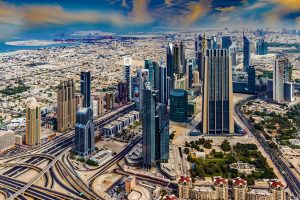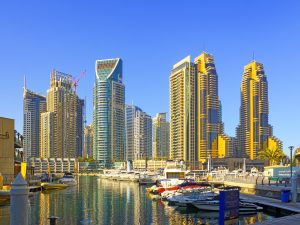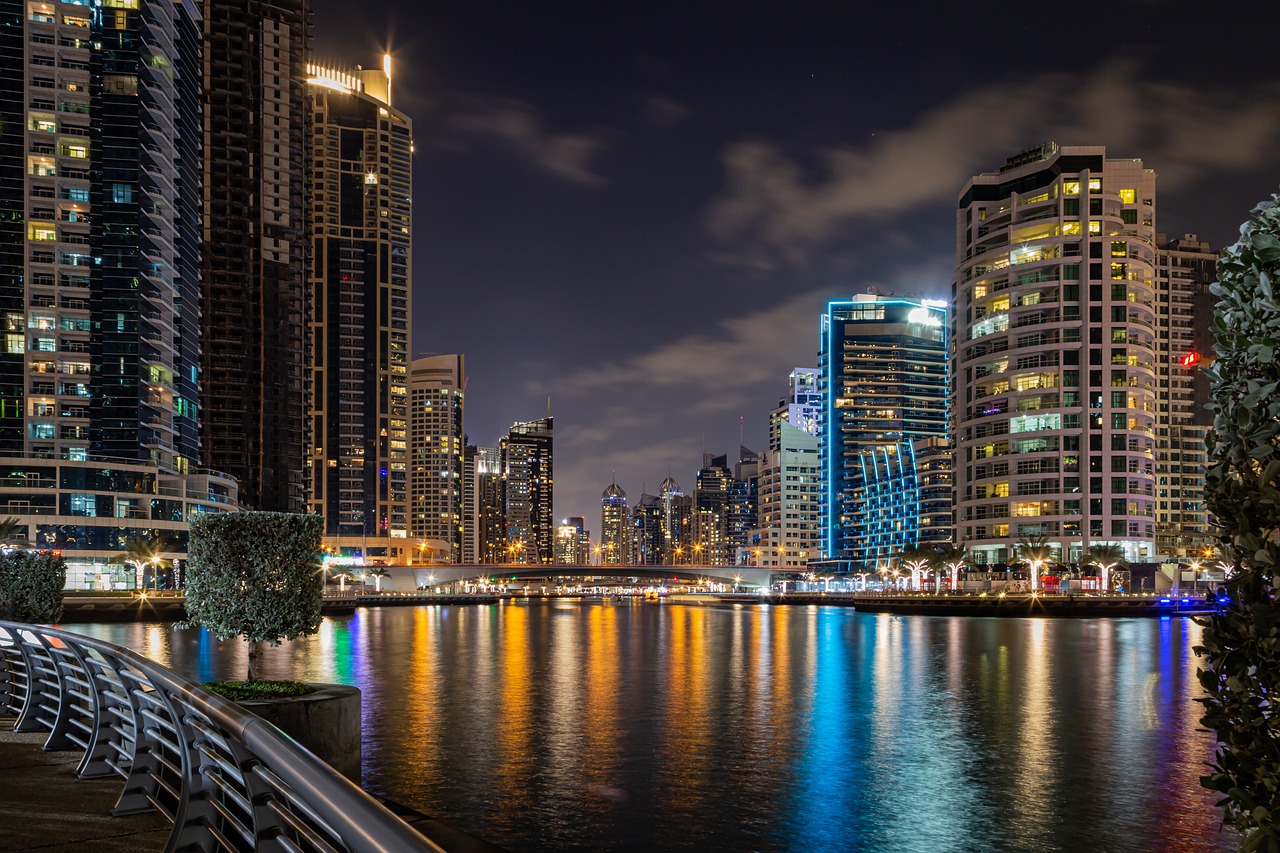
The residential real estate market in the UAE, particularly in Dubai, faces a major challenge in 2025, with a decline in customers’ purchasing power due to rising prices. The real estate market in Dubai is expected to experience similar pressures. Major developers in Abu Dhabi and Dubai bear the responsibility of regulating the market rhythm, achieving a balance between supply and demand, and keeping rental returns at an attractive level, according to “Bloomberg Intelligence.
Curbing price increases is a crucial factor for the future of major real estate development companies in the UAE, led by “Emaar Properties” in Dubai and “Aldar Properties” in Abu Dhabi. With affordability becoming a challenge for buyers, developers have traditionally managed the market by balancing supply with demand through rescheduling planned projects and avoiding excessive project launches.
Many analysts had predicted a moderation in the pace of property and rental price increases—which has made Dubai one of the world’s leading real estate markets—or even a decline by early 2024. However, these expectations have not materialized despite ongoing tensions from the war between Israel and Hamas, the rising cost of living, and the reduced appeal of the city to wealthy Russians.
This comes amid expectations that housing demand in Dubai will outpace supply, driven by population growth, which means prices will continue to rise, according to Timor Khan, Head of Research for the Middle East and Africa at “JLL,” in an interview with “Asharq” at the end of November. Khan estimates that the market will reach a kind of equilibrium starting in 2027, after the completion of ongoing projects and the introduction of housing units to the market.
Gains in home prices and rents in Dubai
The average home price in Dubai rose by 16% in the twelve months up to September, compared to 19% in 2023, supported by demand from high-net-worth individuals, reforms that attract long-term buyers, and controlled supply. Rents grew by 17% this year, unchanged from last year, reflecting price increases and keeping returns stable in the market, according to “Bloomberg Intelligence.”
Despite the growth, while real estate market in Dubai still has the ability to attract new buyers, affordability is being impacted by recent price increases. Therefore, “Bloomberg Intelligence” suggests that further price increases might be limited to avoid negatively affecting the “strong” rental returns in the emirate, which range between 5% and 6%, compared to around 3% for home rentals in Hong Kong and India, making it particularly attractive to Asian investors.
Expectations regarding prices in Dubai are mixed. “S&P Global” reported that “property prices in Dubai will stabilize starting next year and throughout 2026 when thousands of sold housing units are delivered.” Conversely, real estate consultancy “Knight Frank” predicts that home prices in Dubai will jump again next year after already rising by 20% from the beginning of 2024 to December.
Home prices in Dubai have increased significantly since late 2020, rising by 58% and exceeding their 2014 peak by 8%. However, in Abu Dhabi, prices have only increased by 10% during the same period and remain 20% below the 2014 peak. “Bloomberg Intelligence” indicates that this suggests there is room for price increases in Abu Dhabi, considering the external demand.
Strength of Real Estate Fundamentals in the UAE
Despite the affordability challenge, the fundamentals are strong. The real estate market in the UAE in general, and Dubai in particular, has achieved the largest gains in the Gulf region since the peak of the COVID-19 pandemic. This success is attributed to sector reforms that have strengthened its global ties and its status as a safe haven, attracting foreign inflows. At the same time, real estate market in Dubai has demonstrated resilience to external shocks, remaining unaffected by economic uncertainty, rising interest rates, and conflicts in the Middle East.
Price growth has been bolstered over the past four years, with the average price of units under construction in “Emaar Properties” portfolio increasing by 50% to 3.4 million dirhams (approximately 1 million dollars) compared to the low of 2.3 million dirhams (600,000 dollars) recorded in 2020. Generally, few projects are priced below this level.
Price growth has also been supported by increased demand from investors in Russia, China, and India.
At the same time, population growth will be a crucial factor in absorbing the entry of 50,000 new units annually, with the rise in project launches and deliveries expected to reach a record level in 2027 and 2028.
Additionally, construction sector spending in the UAE, excluding the portion allocated to the oil, gas, and petrochemical sectors, has focused on housing since the pandemic. The population is growing rapidly, driven by an influx of expatriates, with Dubai’s population expected to increase to 5.8 million by 2040 from 3.6 million in 2023.
The total value of current construction projects in the UAE is approximately $590 billion, with residential projects accounting for around $125 billion (21%) and mixed-use projects valued at $232 billion (39%), according to a report by real estate research company “JLL.”
Shift in Buyer Demographics
“Bloomberg Intelligence” indicates that the composition of property sales for “Emaar” in the UAE has shifted this year towards clients from the Gulf Cooperation Council (GCC) countries, China, and the United Kingdom. Indian investors have remained at the top of the buyers’ list since last year, while Russia has fallen to the bottom of the list.
Conversely, Russian investors were the top buyers last year, followed by their counterparts from India, the UAE, and China. The slowdown in purchases by European and Russian investors has led “Emaar” and “Damac” to seek new investors.
- Read also,
- Dubai Real Estate Market: A Look To 2025
- Real Estate Sector in Dubai: A Bright Future for Investments
Chinese purchases have recovered to pre-pandemic levels, exceeding 3 billion dirhams last year, according to “Bloomberg Intelligence” estimates. Indian investment in the UAE real estate market has also remained stable, supported by companies relocating their headquarters to the country. Last year, 15,481 new Indian companies were licensed, according to the Dubai Chamber of Commerce. Pakistani and Chinese companies are following the same path to operate in the UAE.